

Best AI Tools for Beginners in 2026
AI Tools for Beginners : Artificial intelligence is no longer difficult. In fact, by 2026, AI tools will be simple and easy to use. Even those with no technical background can get started.
This guide will help you find the best AI tools for beginners. These tools are simple to use, useful, and, for the most part, free.
Why Beginners Should Use AI Tools
First and foremost, artificial intelligence tools save time.
Second, they make things easier.
Furthermore, they promote writing, learning, and creativity.
As a result, beginners can work more quickly and effectively.
What Makes an AI Tool Beginner-Friendly?
An effective AI tool should be:
- Easy to use.
Simple interface.
No coding is required.
Helpful from day one.
In short, beginners should use tools that solve real-world problems quickly.
AI Tools for Beginners
1. ChatGPT (Best Overall AI Tool)
ChatGPT is one of the most popular artificial intelligence tools. It enables students to write essays, solve problems, and comprehend complex concepts.For example, you could ask it to explain a topic in simple terms.Furthermore, it can spark ideas for assignments.
2. Google Gemini (Best for Research)
Google Gemini is ideal for research and quick answers.
For example, you can summarize lengthy articles.
Furthermore, it provides accurate and up-to-date information.
So it’s ideal for students and beginners.
3. Grammarly (Best for Writing Improvement)
Grammarly enables you to write better English.
Furthermore, it corrects grammar mistakes instantly.
It also improves the clarity of sentences.
As a result, your writing will become more professional.
4. Canva AI (Best for Design)
Canva AI is ideal for beginners who want to design.
Create presentations, social media posts, and thumbnails.
Furthermore, it makes use of drag-and-drop functionality, making it extremely simple.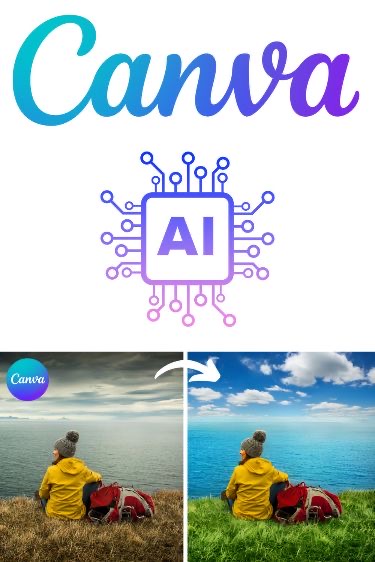
5. Notion AI (Best for Productivity)
Notion AI can help you organize your work.
For example, you can make notes and manage tasks.
It also has the ability to summarize lengthy content.
Thus, it is ideal for both students and professionals.
6. Perplexity AI (Best for Research with Sources)
Perplexity AI provides answers with references.
As a result, you can believe the information.
Aside from that, it is extremely useful for academic purposes.
7. Claude AI (Best for Long Writing)
Claude AI is known for producing high-quality writing.
In other words, it generates more natural content.
So it’s ideal for blogs and detailed articles.
8. Microsoft Copilot (Best Free AI Assistant)
Microsoft Copilot is another excellent tool.
Aids in writing Generates images Operates within browser
As a result, beginners can use it with ease.
9. Otter.ai (Best for Notes & Lectures)
Otter.ai converts speech to text.
For example, you could record lectures.
Then you can read them later.
This makes studying easier.
10. NotebookLM (Best for Study & Notes)
NotebookLM helps you understand documents.
Additionally, it summarizes your notes.
Beginners will be able to learn more quickly.
Tips for Beginners
- Start with one tool only
- Practice daily
- Do not depend completely on AI
- Always check the results
In fact, learning AI step by step is the best approach.
Conclusion
In conclusion, AI tools will be extremely useful for beginners in 2026. They are straightforward, powerful, and easy to use.
However, the best approach is to start small. First, learn one tool, such as ChatGPT. Then investigate others.
This allows you to master AI without confusion.
FAQs
Are AI tools free for beginners?
Yes, most tools offer free versions.
Which AI tool is best to start with?
ChatGPT is the easiest and most useful tool.
Do I need technical skills?
No, most AI tools are designed for beginners.